• The notion that you grow out of being a child is a misunderstanding. A healthy individual does not “grow out of” their childhood, but instead everything that comes after childhood is an addition to themself that they must integrate as one. One collectively adds onto themself, rather than changing throughout the years.

    “Change” is natural, but the change we go through is misunderstood. What one might define as change is our constant attempt to integrate all of ourselves. As time passes, we have a lot to integrate and balance. Healthy growth is balancing and merging the 5 year old, the 21 year old, and the 40 year old versions of one into a single being. This is often hard, and requires lots of work.

    A lot of times it is easier to repress your past. Integrating your past and your childhood also means accepting the parts that we attempt to repress. An unhealthy individual fails to integrate, and instead represses their past. People with trauma naturally and reasonably repress their past. However, that child within them still exists, and that child hurts.

    No matter how much running one does, there is no health without turning toward that inner child, listening to them, and allow them to walk with you everyday. It’s hard work, but it needs to be done.

    Written in my notes app on my Uber home from work. I know it sounds simple, but being friends with my inner child is the coolest thing ever.

    1. Unknown's avatar
    2. Unknown's avatar

      For example, the legal consent and drinking ages maintain order, but they do not reflect a truth about maturity. The…

  • Whether you believe in a higher power, cosmic randomness, or something in between, there’s a collective understanding that we did not choose our bodies under our own volition. None of us chose our race, culture, or birthplace. Despite this, people often derive their sense of community and identity from these (dare I say) superficial, chance variables. Belonging in “assigned” communities, such as culture, can be comforting, but that comfort can come at the expense of self-actualization. It’s still valuable to find community in what we were given, but it is even richer to find community in what we create.

    Coming from a rich multicultural background, I understand the significance of cultural belonging and do not mean to minimize it. It feels good to be surrounded by those who eat the same foods, speak the same languages, and have similar physical characteristics. It’s the easiest path to identity and community, but it often comes at the expense of agency and individuality.

    Collective cultural identity often arises from people searching for connection through what is most accessible: the visible. At a young age, this makes sense, but as we age, we drastically expand our capacity and desire for meaning. We are capable of creating meaning far beyond that of flesh and blood. We can form deeper community built on shared passions and values.

    There are two main problems with over-reliance on inherited identity for belonging: First, it limits our growth as individuals. If we surround ourselves only with people who look or sound like us, we risk falling victim to groupthink. Carrying others’ beliefs as your own is like hosting a parasite that slowly erodes your spirit until all that remains is a walking husk of a human. The second problem is that it reinforces division. When comfort depends on physical similarity, it is only natural for discomfort to arise around those who differ. Systems of control have derived their power from the simple strategy of divide and conquer for ages.

    I find it fascinating that forced segregation and identity-based collectivism can function as two sides of the same coin. Both lead people to seek belonging among those who share race. The difference lies only in the motivator. Segregation is fear-based, whereas identity-based collectivism sustains division through promoting comfort.

    Consider how a school counselor might tell a freshman in college to join a cultural club when they struggle to fit in. Although there is good intent behind this advice, it can be confining to their development. It’s similar to treating symptoms versus treating the root of the problem, but it is something we like to do in America: “Oh, you’re having trouble assimilating into a system that’s fueled by slowly grinding your soul into dust? Why don’t you go stand in a room of full people whose shit smells the same as yours for once a week. How does that sound? ” Ha. I embellish, but the point stands.

    I say none of this to say cultural pride or belonging is wrong. There is beauty in shared heritage, but I must ask: Are we finding true community, or simply the easiest one to access?

    I believe true community is founded upon shared curiosity, love, and perspectives; Spaces we enter by choice. There’s power in people who differ uniting on common ground. That kind of community is built, and I think that’s beautiful.

    1. Unknown's avatar
    2. Unknown's avatar

      For example, the legal consent and drinking ages maintain order, but they do not reflect a truth about maturity. The…

  • So many rules and labels exist to ease our minds. We build and believe in systems and categories to comfort us amidst the uncertainty in this world. Yet when you look just past the surface, we find that so many of them are arbitrary, even borderline nonsensical.

    We search for answers in life. The fewer we have, the more we search. The more we search, the more we are cursed attempting to find answers in an individualized experience that is inherently subjective. There are always multiple truths, but that creates dissonance… So we construct meaning, even if it is artificial. Rules and labels are often built from our innate need to have answers. We grasp at any sliver of agency in a world where our will is subject to powers far greater than ours.

    Let us consider the example of age. The day before someone’s 18th birthday, they are a minor. The next day, they are an adult. Engaging in sexual relations with them a day before is a crime, yet it is legal the next day. This rule gives us a sense of simplicity in such a complex and layered world. The same goes for liquor laws. At 20, drinking liquor is a crime, but it is celebrated at 21. Other countries set the age at 16. Each country finds logic in their respective rules. Not because of any innate truth or science behind these laws, but because they provide structure.

    The concept of mental illness can be arbitrary, as we diagnose people with different disorders because of their resistance to live within the confines of walls that do not serve them. Heck, we even invented arbitrary trackers and definitions of time to protect us from the impossibility of rationalizing such an absurd concept.

    These rules and constructs are not rooted in universal truth, but are rather man-made comforts. These comforts give us stability, for better or for worse.

    We build walls for us to live within, and in these walls, we find comfort. The less walls we have, the more open space there is. The more space we have, the more uncertainty there is to face.

    Paradox: space brings freedom, but freedom brings uncertainty. Uncertainty creates anxiety. Not pathological anxiety, but ontological anxiety. Ontological anxiety is the cause of many of the problems we face, whether we are aware of it or not.

    Catch-22: We can either create walls to form our paths, but know the walls are rooted in fiction, or live without walls, but face the vast uncertainty of existence. Of course, a medium is needed between these ends to be healthy, but what does that balance look like?

    Of course a counterargument is we need rules and walls to run such a large country. This is true in a practical sense, as any society needs structure to function. But just because a rule is functional does not mean there is innate truth to it. For example, the legal consent and drinking ages maintain order, but they do not reflect a truth about maturity. The laws are convenient, nothing more.

    It becomes a problem when these arbitrary rules become so embedded within our own morality that we start to feel as though there must be some level of moral or philosophical truth within them. Over time, we stop questioning them to ease our cognitive dissonance, and we find ourselves stuck within the confines of these walls.

    Even if one believes that order, regardless of the truth behind it, is a benefit to humanity, one must question who benefits from this order? Does this order exist for our well-being, or for the preservation of the systems themselves?

    Existential psychologist Irvin Yalom spoke of four ultimate concerns we face in life: death, meaninglessness, isolation, and freedom. We respond to these anxieties, each in their own way. For death, we created the concept of legacy and engage in different cultural rituals to extend life beyond death. For meaninglessness, we follow philosophy, religion, and set goals. For isolation, we join communities and movements larger than ourselves. These responses are healthy, as they bring us purpose. However, our response to freedom is different, and potentially problematic.

    As Jean-Paul Sartre said, “Man is condemned to be free.” Freedom is the source of both our suffering and our potential. A healthy response to freedom is embracing it as an opportunity to create authentic meaning for ourselves. Instead, we are programmed to reduce it by the institution of walls of rules and labels that make the gift of freedom feel more manageable. We lose individuality and become a product of the system as opposed to a product of self-actualization and reflection. Individuality is born in exploring the spaces between the walls, and the space after knocking them down.

    To begin knocking some of these walls down, I ask: Is our logic really logical? What is the rationale behind the basic truths we believe to be true? Is there rationale?

    Many rules exist to punish malevolent behavior, but we must ask why that behavior exists in the first place. If people were living in accordance with truth, the individual truth resonating within us, then perhaps there would be less need for so many rules. A world with fewer rules sounds unrealistic, but that is because we are conditioned to see order as the only path to peace.

    There are walls we create for ourselves, there are walls that are systematically programed within us, and there are walls that are reactions to the world around us. Some are imposed on us, and some we impose upon ourselves. Some walls provide us with necessary structure. Some of us function better with more walls. Whatever works, works. What works for one won’t work for another. Celebrate this reality. Let your layers and textures show. Let others’ layers and textures show. Let them all coalesce to create this rich and vibrant place we all call home.

    Reflect. Remain critical, not just of the world around you, but of yourself… Especially of yourself.

    Which walls in your life benefit you? Which walls harm you? Who built the walls? You? Your family? The systems of control? Can you break any walls down? Are there walls you need to build?

    The best way to change the world is to change yourself.

    1. Unknown's avatar
    2. Unknown's avatar

      For example, the legal consent and drinking ages maintain order, but they do not reflect a truth about maturity. The…

  • The “burden of knowing” is a term that I am using to describe the negative effects of learning and acquiring knowledge (there is a scientific definition, but that is not what I reference). The discussion I want to open is multi-faceted, as there are different “burdens.” Today I want to focus on one in particular: how answers can suffocate curiosity. Let me start by using a recent anecdote of mine as an analogy.

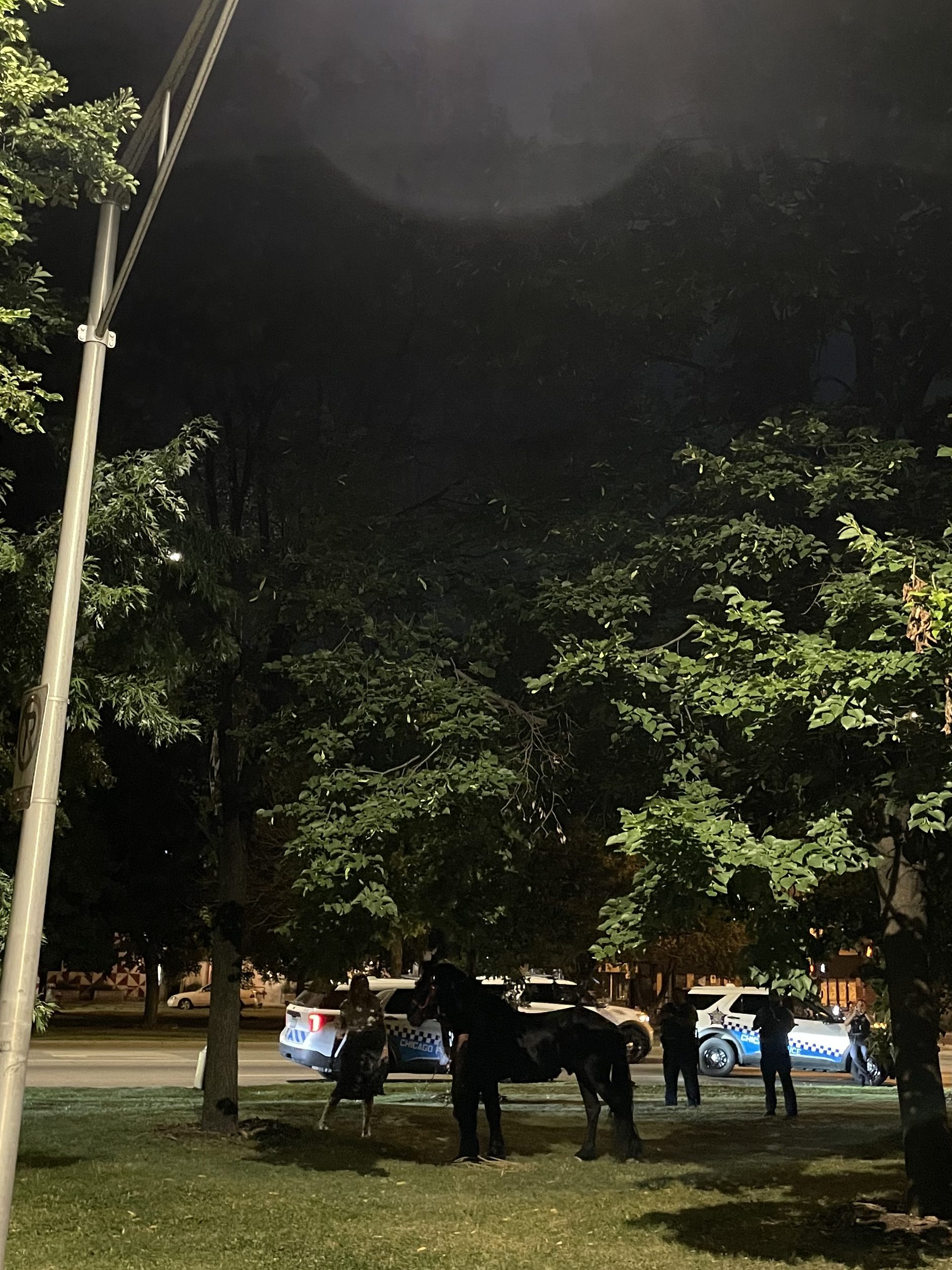
    A couple of months ago, this past summer, a good friend and I were chilling in a park on a very late Sunday night. We suddenly heard something that sounded like a human running full speed toward us. We turned around, and to our bewilderment, saw a full-grown horse galloping down the city streets. It sported no harness, no rider… There was no one else in sight. Our immediate reaction was shock. We had no idea what happened, why it happened, or how it happened. We were served a mystery on a silver platter, and I couldn’t have asked for more.

    We sat and theorized. What could the horse mean? Where did it come from? Why was it there? Our imaginations ran wild, and it felt so refreshing. In that moment, I was perfectly content letting my mind wander through it all. However, our curiosity overcame that satisfaction. We wanted answers. Far off in the distance, we saw the same horse being escorted by a caravan of police cars. Brimming with excitement, we got up and chased them down. I felt a surge of energy rush through my system. My friend felt it too. We were ecstatic.

    We reached the scene. The police cornered the horse on the boulevard. We marveled at the situation, and when things couldn’t seem to get crazier, a REAL LIFE cowboy hopped out of a squad car: boots, hat, jeans, the bravado… he had the whole package. I immediately wondered, Who is this man? Why is there a horse wrangler in a police car at 2:30 a.m. on a Sunday? I got to bask in the infinite possibilities my mind conjured, and I was once again content in the moment. 

    This is was when we first arrived, before the cowboy came. I wish I got a picture of him, but I was caught in the moment of it all.

    After the cowboy got the horse under control, we asked questions. It turns out there had been a local birthday party in the neighborhood. The birthday girl’s uncle had brought his horse from a ranch far away. The cowboy was the uncle. Case solved. Mission success… But I felt deflated. The mystery was gone… No more questions. I had answers. Success, right? Maybe. I had a cool experience, and I got my closure, but I would have loved to go back to that state of absolute curiosity. I no longer had the privilege to sit back and imagine the wild possibilities: What if it were the last wild horse in America? What if it was a mirage? A spirit from horses past? Anything could have been real in my head. That infinite possibility. It’s such a powerful state because it lets our minds tap into the curiosity that drives humankind.

    Once I knew the truth, I couldn’t do anything with it. Sure, I knew what happened, but what did that knowledge mean? Is there meaning in knowing? Is there feeling in knowing? To each their own, but for me, knowing felt like a burden. It weighed on my curiosity.

    Broadening this: humans have an innate desire to learn, categorize, and make sense of themselves and the world. As we age, we collect answers to our questions. But in doing so, we can lose the imagination of what could be. Maybe curiosity is a biological mechanism that pushes us to uncover survival-critical information. Perhaps we lose that curiosity once we reach a state where our needs are met and we can survive comfortably. I could be reading into it too much, and that’s all it is. But what if there is something more to it? What if our curiosity is a superpower, and information is its kryptonite?

    In this time of instant information and gratification, so many things are answered at the push of a button. The internet pacifies our biological gift of curiosity. What if, just what if, the systems that control us actually invite us to live under a crushing burden of knowing. What if we are intentionally flooded with so much information (even information that incriminates the system) to handicap our curiosity? Surely the system and the status quo benefit from it. If we no longer have to push the boundaries to learn, we become more controllable people. If the answers to our mysteries are served to us on a silver platter, we become more controllable. 

    So stay present. Interact with the environment around you. Use your free will. Find and solve mysteries- or don’t… Maybe just finding mysteries is enough, and our curiosity does the rest. To each their own. I only ask these questions to ponder myself and invite dialogue. There are no definitive answers. Everything is circumstantial and context-dependent. However, I do have one more question: what if the key is not solving mysteries, but entertaining them? Living amongst them? Being one?

    1. Unknown's avatar
    2. Unknown's avatar

      For example, the legal consent and drinking ages maintain order, but they do not reflect a truth about maturity. The…

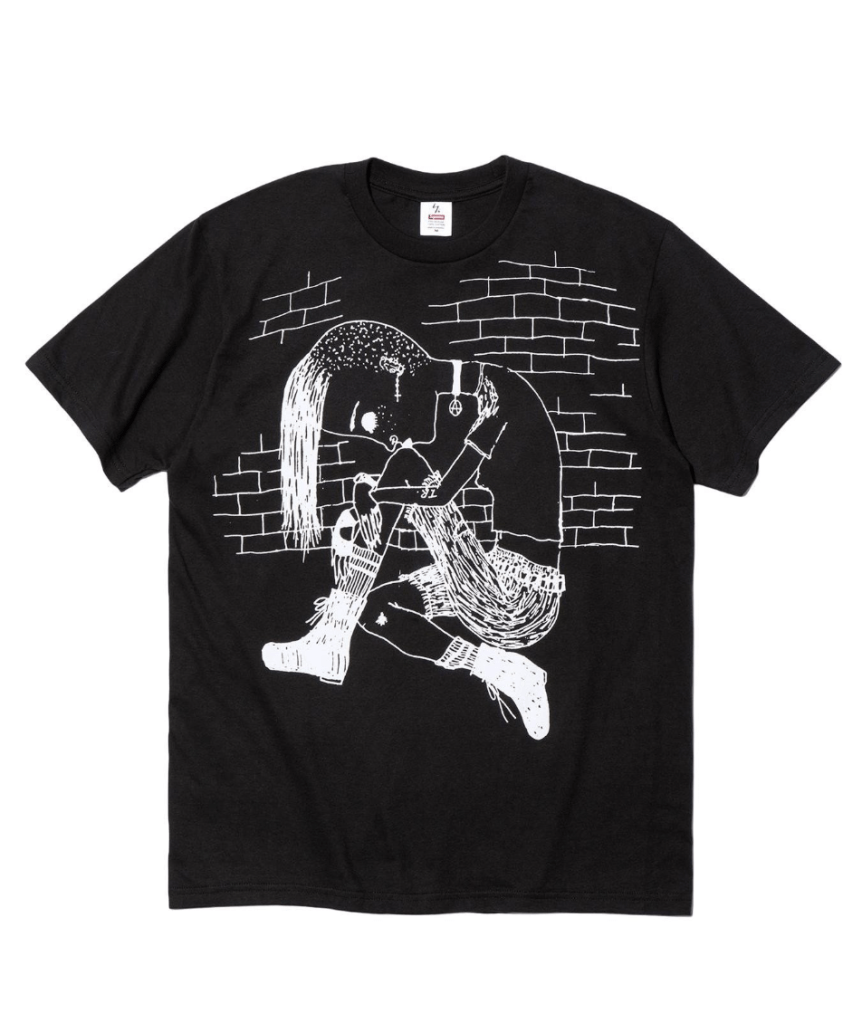
  • So I was looking at the upcoming Supreme drop and saw this graphic tee that really got me thinking. I was intrigued* by the image when I first saw it. Not because of the artwork itself, but because of what it’s existence represented on a larger level. The shirt depicts this depressed, rebellious figure with an anarchy necklace, shaved head, and dark Gothic imagery. And it struck me: why does society think rebels are cool?

    *intrigued does not mean I liked it

    When you break down why systems exist, you realize they all share the same foundation. Systems are meant to make life easier, to create unity. Whether it’s religion, fashion, or the larger socioeconomic structures we live under, systems are supposed to support us. But what happens when they don’t? If our systems truly benefited us, it would actually be cool to embrace them. It would be cool to wear clothes that celebrated our society. But when I look around, that’s not what I see. Instead, I see people doing everything they can to distance themselves from the systems we live in: through the philosophies they follow, the clothes they wear, and the ways they carry themselves.

    Think about it: so many of our stars, artists, and cultural icons are admired because they “break the mold.” But why are we so obsessed with breaking the mold? This is not just natural human behavior. People distance themselves from conformity because they recognize how broken our systems really are.

    Now, imagine a society where the coolest thing was to belong. Imagine that! Hard, right? Today, people who “belong” are labeled sheep, conformists, robots. But if the systems we lived in were truly on our side, then being a rebel, a punk, or an antihero wouldn’t be glamorous at all. It would actually be a bad thing to break away from a system that made our lives better. Outcasts would genuinely be outcasts.

    However, here’s the thing: the fact that rebels, misfits, and outcasts are now seen as heroes is a sign that we are failing as a people. It suggests that something is deeply wrong and that change is overdue. If our systems no longer serve us, then why do they still exist? And more importantly, what are we doing to reshape them so that they actually meet our needs?

    1. Unknown's avatar
    2. Unknown's avatar

      For example, the legal consent and drinking ages maintain order, but they do not reflect a truth about maturity. The…